
Office carpet is usually the largest single surface in a workplace and the one that receives the least deliberate attention. It absorbs everything that comes in on shoes, holds it, and looks acceptable for far longer than it actually is. By the time traffic lanes are visibly darker than the surrounding area, the fibres have already sustained damage that no amount of cleaning will reverse. Understanding how office carpet cleaning services singapore businesses rely on actually work makes the difference between extending a carpet’s life and quietly shortening it.
Why Carpet Deteriorates Faster Than It Looks
The damage is mechanical rather than cosmetic. Soil tracked in from outside is largely mineral grit, and grit acts as an abrasive underfoot, cutting fibre with every step. Once fibres are cut they lose their ability to reflect light evenly, which is what produces the permanently dull traffic lanes visible in most offices. This is why vacuuming frequency matters more than cleaning frequency removing grit before it is ground in prevents the damage, while cleaning afterwards only removes what is left behind.
The Climate Adds Its Own Problems
Persistent humidity changes the calculation considerably. Carpet that stays damp after cleaning becomes a substrate for mould and bacteria, and in air-conditioned buildings the temperature differential means moisture does not always evaporate as quickly as it would elsewhere. Drying time is therefore a genuine performance criterion rather than a convenience issue. Any method that leaves a carpet wet for many hours in this environment is introducing a problem while solving another.
The Main Methods and What They Suit
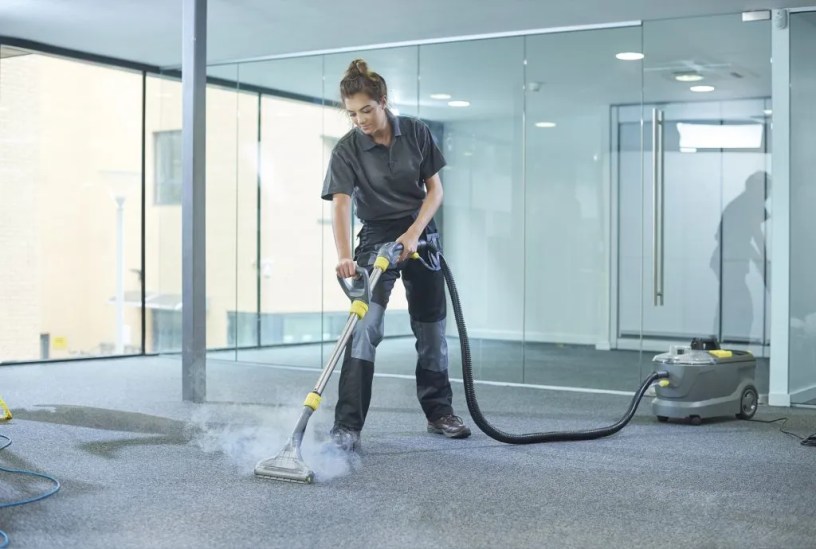
Hot water extraction, often called steam cleaning, injects heated solution and immediately extracts it along with suspended soil. It cleans most deeply and carries the longest drying time. Encapsulation applies a polymer that crystallises around soil so it can be vacuumed away, dries within an hour or two, and suits regular interim maintenance well. Bonnet cleaning uses an absorbent pad on a rotary machine for fast surface work but does little below the surface and can damage fibre if overused. Dry compound cleaning spreads an absorbent material that is worked in and vacuumed out, with minimal moisture. Specialists in cost of carpet cleaning work will explain how method choice affects both price and downtime.
Building a Programme Rather Than Booking a Clean
Reactive cleaning is the expensive approach. A better structure has three layers: daily vacuuming with a machine that actually has suction and a working filter, interim encapsulation of traffic lanes every one to three months depending on footfall, and deep extraction once or twice a year. Entrance matting is the fourth and cheapest element several metres of proper matting captures a large proportion of incoming soil before it reaches the carpet at all, and it typically pays for itself within a year in reduced cleaning frequency.
Scheduling Around Occupancy
Timing determines both cost and disruption. Overnight and weekend work avoids interfering with operations but attracts higher rates. Zone-by-zone cleaning during working hours is cheaper and requires coordination with facilities and the teams affected. Whichever applies, drying time needs to fit the window a carpet cleaned on Sunday afternoon with a six-hour drying requirement is fine; the same job at 6pm on a weekday is not. Confirming realistic drying times in writing avoids Monday morning complaints.
Spot Treatment and Staff Response
Most permanent stains become permanent because of what happened in the first few minutes. Coffee, ink and food spills respond well to prompt blotting with a clean cloth and resist removal once dried or, worse, once someone has scrubbed them. Providing spill kits at pantry areas and a one-page instruction on what to do costs almost nothing and measurably reduces the number of stains that require specialist treatment later.
What to Ask a Provider
Ask which method they propose for your carpet type and why, since some fibres and backings tolerate moisture poorly. Ask for realistic drying times rather than optimistic ones. Ask whether furniture moving is included. Ask about the solutions used and whether they leave residue, because residue attracts soil and causes rapid re-soiling the most common reason a carpet looks dirty again within weeks. Ask whether the same crew attends each time, since familiarity with a site produces more consistent results.
Judging Value Properly
Comparing quotations on price per square metre alone misses most of what matters. Method, drying time, whether furniture is moved, whether spot treatment is included and whether a maintenance programme is offered all affect the real cost of keeping a carpet serviceable. Comparing scope rather than headline rates is more useful, because the cheapest visit often produces the shortest interval before the next one. Folding carpet work into a broader professional office cleaning services contract usually improves both the price and the consistency.
The Underlying Argument
Replacing office carpet is a significant capital expense and a disruptive project. Extending its serviceable life by several years through matting, regular vacuuming and a planned cleaning cycle costs a fraction of that and delivers a workplace that looks maintained rather than tired. It is one of the few facilities decisions where the cheap option and the correct option are genuinely the same thing.
 The Best Business Blog