
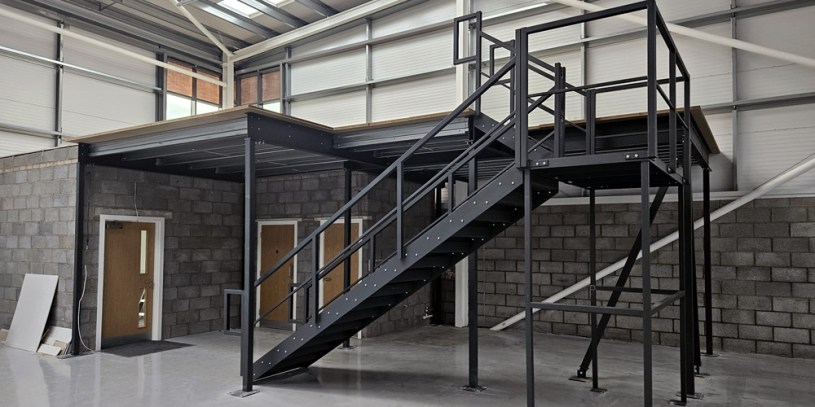
A Mezzanine floor represents the architectural equivalent of discovering hidden treasure in your own property—a revelation of space where none seemed possible before. In the dense urban landscape of Singapore, where every square metre commands a premium, these intermediate levels emerge not merely as pragmatic solutions but as transformative interventions in the built environment.
The Vertical Revolution You’re Overlooking
The etymology tells us something profound: “mezzanine” derives from the Italian “mezzano,” meaning middle or intermediate. But this linguistic designation barely scratches the surface of what these structures actually accomplish. In the cramped confines of Singapore’s commercial and industrial sectors, these floating platforms don’t simply add floor space—they rewrite the fundamental equation of spatial economics.
“The implementation of a well-designed mezzanine system can effectively double usable floor area without the prohibitive costs of relocation or expansion. In Singapore’s context, this represents not just square footage gained, but competitive advantage secured.” – Singapore Building Authority analyst
What distinguishes the truly remarkable installations from mere functional platforms is their seamless integration into the existing architectural grammar of a space. The best examples disappear into the overall composition while paradoxically making their presence felt through the new possibilities they engender.
Beyond Simple Square Footage: The Cultural Significance
The mezzanine exists in a liminal state—neither ground nor proper upper floor. This in-between quality mirrors Singapore’s own position as a crossroads of East and West, tradition and hyper-modernity. The mezzanine floor embodies this duality: a thoroughly contemporary solution with echoes of traditional Asian spatial efficiency.
Consider the following impacts:
Spatial democracy –
Mezzanines distribute activity vertically, creating microclimates of function within a single volume
Visual dynamism –
The interplay of heights, sightlines and perspectives enriches otherwise mundane environments
Psychological expansion –
Even when square footage increases modestly, the perception of space multiplies exponentially
Environmental efficiency –
Utilising existing envelope conditions rather than expanding footprints represents sustainable thinking at its most pragmatic
The Pragmatic Revolution: Applications Across Sectors
In the relentless pursuit of maximising returns on spatial investments, Singapore’s commercial landscape has embraced mezzanine solutions across remarkably diverse contexts:
Industrial Transformations
What began as simple storage platforms have evolved into sophisticated multi-level operations centres, allowing manufacturing and logistics operations to expand processing capacity without expanding their geographic footprint. The warehouse revolution occurring in Singapore’s industrial zones represents a particularly potent example—facilities once constrained by horizontal limitations now soar internally, their mezzanines creating intricate vertical choreographies of inventory management, with goods moving not just across floors but through three-dimensional space in a ballet of logistical efficiency.
Retail Revelations
The double-height retail space with its floating mezzanine has become almost archetypal in Singapore’s shopping districts. These arrangements create natural zoning—higher-end or specialty merchandise often migrates upward, creating a literal retail hierarchy that guides the consumer journey.
“Our retail mezzanine installation increased browsing time by approximately 23%, with customers reporting an enhanced sense of discovery. The vertical circulation becomes part of the shopping narrative rather than merely functional movement.” – Singapore retail space consultant
Office Innovations
Perhaps nowhere is the mezzanine more revolutionary than in contemporary office design, where these intermediate platforms create natural delineations between collaborative and focused work zones without resorting to the claustrophobic cubicle arrangements of previous generations. In Singapore’s burgeoning fintech sector, the most celebrated workspaces feature mezzanine-based designs that mirror their hybrid business models—part traditional finance, part digital disruption—with upper levels typically housing contemplative spaces where complex problems find solutions, while ground levels pulse with the kinetic energy of collaboration. These aren’t merely functional decisions but philosophical statements about work itself—an acknowledgment that different modes of thinking require different spatial contexts.
Technical Considerations: Not Simply Stacking Space
The successful mezzanine requires thoughtful engineering rather than mere construction. The Singapore context presents unique challenges:
Structural integrity –
Retrofitting existing spaces demands careful load calculations
Compliance complexity –
Building codes regulate everything from railings to emergency egress
Accessibility imperatives –
Inclusive design ensures all users can navigate the vertical transitions
MEP integration –
Mechanical, electrical and plumbing systems must extend seamlessly to these new zones
Acoustic engineering –
Sound transmission between levels requires sophisticated dampening solutions
Lighting dynamics –
Natural light penetration to lower levels demands strategic design interventions
“The most successful mezzanine installations in Singapore demonstrate an almost invisible technical sophistication. When occupants move between levels without consciously registering the transition—when the experience feels entirely intuitive—that’s when we know we’ve succeeded.” – Leading Singapore structural engineer
The Future Floats Between Levels
As Singapore continues its evolution as a global hub, the pressures on its limited land mass will only intensify. In this context, the humble mezzanine emerges not as a compromise but as a sophisticated response to competing spatial demands.
The most forward-thinking architects and space planners have begun to conceptualise buildings not as stacked horizontal planes but as continuous vertical landscapes where the mezzanine represents just one of many possible intermediate conditions. These nuanced approaches to three-dimensional space utilisation point toward a future where the binary distinction between floors dissolves entirely.
When faced with the impossible mathematics of limited land and unlimited ambition, Singapore’s solution increasingly involves looking not outward but upward and inward—finding new potential in existing volumes rather than claiming new territory. At the heart of this spatial revolution, simultaneously practical and philosophical, stands the Mezzanine floor.
 The Best Business Blog